
There’s a funny thing about the AI job market in India. Every college seminar says “AI is the future,” but nobody stays back after the talk to explain why your senior with three MOOCs and one chatbot still doesn’t have an offer.
This site exists in that gap: where AI tools, AI news, and actual paychecks intersect. Not the fantasy where everyone becomes an “AI expert” by changing their LinkedIn bio, but the version where you understand what roles exist, what they pay, and what it actually takes to get hired into one of them especially if you’re 18–25 and still stuck between lab exams and LeetCode.
Right now, India has tens of thousands of AI/ML openings and way fewer people who can genuinely do the work. Freshers aligned to AI roles are seeing starting ranges around ₹6–10 LPA in many cases, with AI‑specific roles often touching ₹7–8.5 LPA or more according to recent reports. At the top end, specialised AI engineers and LLM folks are pulling ₹40–70 LPA, sometimes up to ₹90 LPA in the right companies and cities. The question is not “Are there AI jobs?” The question is: are you building the right kind of profile, or just vibes and certificates.
THE THING NOBODY ACTUALLY SAYS OUT LOUD
Let’s start with the uncomfortable bit: most of the “AI job crisis” you see on Reddit and Discord isn’t because there are no AI jobs it’s because there are way more “AI‑on‑paper” candidates than people who can ship something real.
Look at the numbers people who track jobs for a living are sharing. One 2026 guide puts open AI/ML positions in India at over 50,000 with only about 15,000 truly qualified candidates roughly a 3.3:1 demand‑to‑supply ratio. Another breakdown shows AI‑aligned fresher salaries in the ₹7–8.5 LPA range becoming normal, not fantasy, as companies compete for talent. Meanwhile, roles explicitly mentioning generative AI and LLMs have exploded globally, with AI‑skills job postings growing far faster than generic tech roles.
So why are you still seeing people on r/developersIndia ask if data scientist salaries are “lower than SDE” and whether AI is overhyped? Because on the ground, the market is brutally specific. Companies are paying, but only for a few clear buckets:
- People who can build and ship production‑grade ML systems.
- People who can actually work with data end‑to‑end, not just copy notebooks.
- People who understand generative AI beyond “prompt engineer” memes.
Everyone else the ones who finished one course, wrote a “Hello, ResNet” project, and slapped “AI Engineer” in their bio gets swallowed by the noise.
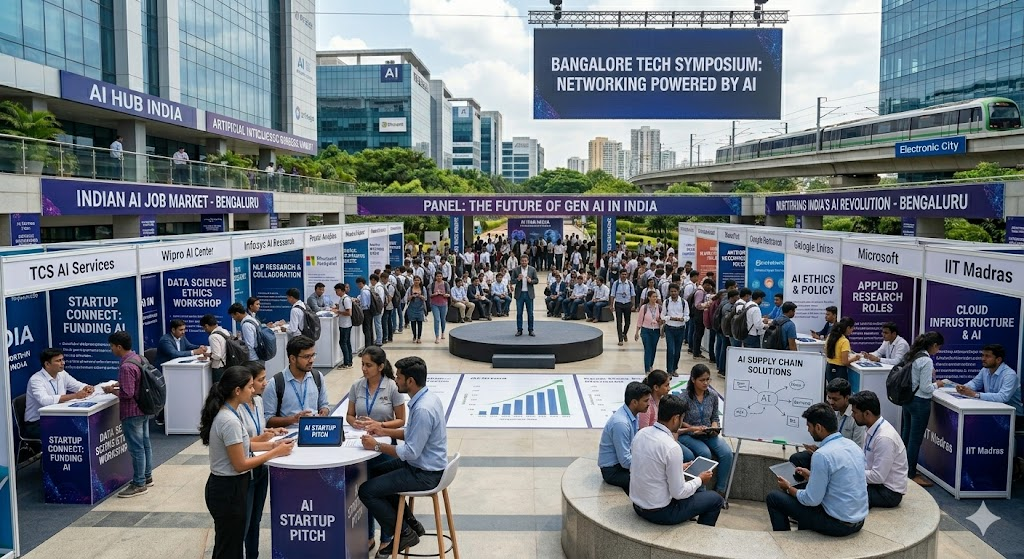
There’s another thing nobody phrases cleanly: global hype has pushed Indian salaries up, but unevenly. AI data scientist ranges of ₹6–10 LPA for freshers and averages around ₹12–28 LPA are being reported off Naukri, AmbitionBox, and Glassdoor data. AI engineer guides quote ₹5–8 LPA for 0–2 years rising to ₹20–40 LPA as you move towards 5–10 years. LLM engineer roles are quoted in the ₹18–28 LPA range for freshers and up to ₹55–90 LPA for seniors in some Indian product companies.
But try telling that to someone stuck in a campus placement queue where the only “AI role” is actually a generic analyst job renamed by HR. This is the split: the public narrative is “AI salaries are insane”; the lived experience for many freshers is “why does this ‘data’ role pay 5 LPA and make me clean Excel sheets all day.”
Here’s the part most placement talks skip: your degree branch matters less than your trail of tangible work. Hiring managers are reading GitHub, Kaggle, and system‑design notes long before they care which “Specialisation in AI” line you added to your CV. The moment you accept that, your entire strategy changes.
And yes, there’s also an ugly truth: some of the highest salaries are concentrated in a few hubs Bangalore alone is estimated to have ~40% of India’s AI jobs, Hyderabad another big chunk, with combined metros paying significantly more than smaller cities. So if you’re sitting in a Tier‑3 city expecting Bangalore pay without Bangalore‑level competition or network, the maths will not line up.
HOW THIS ACTUALLY WORKS THE REAL MECHANICS
Strip away the hype, and the AI job market in India runs on a few basic mechanics: a small set of high‑value roles, a supply gap of people who can fill them, and huge variation based on city, company type, and how close you are to real business impact.
Most current breakdowns of AI roles in India orbit around these:
- Machine Learning Engineer
- Data Scientist / AI Data Scientist
- AI / GenAI / LLM Engineer
- NLP / Computer Vision Engineer
- MLOps Engineer
- AI Product or Applied Scientist–style hybrid roles
A 2026 salary guide puts AI/ML ranges from about ₹8–18 LPA for freshers, ₹16–55 LPA for mid‑level (2–5 years), and ₹30–90 LPA for senior roles, with LLM engineers topping out highest. Another 2025 guide quotes AI engineer salary bands of roughly ₹5–8 LPA for freshers, going up to ₹20–40 LPA in the 5–10 year band, and even ₹50+ LPA for specialists in deep learning/NLP. AI data scientist estimates put freshers at ₹6–10 LPA (up to ~₹12 LPA from elite campuses) and averages at ₹12–28 LPA.
Under the hood, here’s what actually drives those numbers:
- City and ecosystem:
Bangalore and Hyderabad sit at the top of the pile. One breakdown shows Bangalore AI salaries around ₹10–40 LPA and Hyderabad ₹8–30 LPA, with Pune, Delhi‑NCR, Mumbai, Chennai trailing slightly but still solid. Why? Product companies, AI startups, and global capability centres stack there. - Company type:
FAANG/MAANG and big global players in India may offer ₹25–90 LPA for strong AI profiles. Unicorns and growth‑stage product companies hover in the ₹18–50 LPA bracket. Service giants (TCS, Infosys, Wipro, etc.) largely sit in the ₹5–25 LPA range even for AI‑aligned work. Startups can hit ₹25–70 LPA for specialised GenAI roles with all the usual startup chaos attached. - Role depth vs buzzword:
A “Machine Learning Engineer” who builds full pipelines, deploys models, and knows MLOps earns more than a “Junior ML person” copy‑pasting models for PowerPoints. Generative AI/LLM roles now command the highest pay because supply is even thinner: think ₹18–28 LPA freshers and ₹55–90 LPA seniors in some reports. - Proof of work vs credentials:
Real‑world skills are becoming non‑negotiable. Guides and job market analyses all hammer the same list: Python, TensorFlow/PyTorch, data pipelines, cloud, plus domain knowledge. You still see campus placement pushes IITs/IIITs often quote ₹10–12 LPA AI‑aligned packages, mid‑tier colleges see more of ₹6–8 LPA. But outside campus, your portfolio may matter more than your campus.
Some very human observations if you watch this space closely:
- The fastest salary jumps seem to happen when someone moves from “lab environment” to “product environment” i.e., the first time they own something running in production. Employers pay for owning failure, not just writing notebooks.
- A lot of “AI jobs” on job portals are actually data engineering, analytics, or even BI roles repackaged for SEO. The pay bands give it away if it’s 4–6 LPA for heavy “AI” work in 2026, assume it’s mostly spreadsheets.
- Generative AI has created strange pockets of demand: even mid‑tier companies are suddenly hunting for people who can build RAG systems and LLM chatbots on Azure or AWS. That means there’s a window right now where a focused GenAI portfolio can leapfrog you past “classic” ML folks who never updated.
COMPARISON WHAT’S ACTUALLY DIFFERENT BETWEEN YOUR OPTIONS
Here’s how your realistic paths into “AI work” in India shake out if you’re 18–25.
| Option | What it actually does | Who it’s for | The catch |
| Generic data/analytics role rebranded as “AI” | Excel/SQL, dashboards, maybe basic models; limited ML depth | People who want a safer entry into tech with some data work | Often 4–8 LPA; slow path into real ML; branding sounds cooler than the day‑to‑day |
| Classic ML / Data Scientist track | Build models, run experiments, handle data pipelines, maybe deploy | Students who enjoy math, statistics, and coding, willing to learn infra | Competitive; salary spreads roughly 6–20 LPA early on, more with strong companies and cities |
| GenAI / LLM Engineer path | Work with LLMs, RAG, prompt design, vector DBs, MLOps | Builders comfortable with fast‑moving tools and ambiguous problems | Highest upside (18–90 LPA), also highest noise and expectation to show real portfolio |
If you want my take: aim for the classic ML/data scientist track as your base, then layer GenAI/LLM skills on top. The first keeps you employable; the second gives you access to the roles where India is currently overpaying because they simply can’t hire enough people.
WHAT ACTUALLY HAPPENS WHEN YOU TRY THIS
When you actually try to enter the AI job market in India instead of just reading salary screenshots, your experience will look very different from the LinkedIn success posts.
First, you realise how many “AI roles” are just badly labelled. You apply to something called “Junior AI Engineer,” and the interview is 80% SQL, 10% Excel, and one question about linear regression from a textbook. The offer comes in at 5.5 LPA, and suddenly those “₹40 LPA AI jobs” feel like fiction.
Then you talk to someone who actually works as an ML engineer in Bangalore building production models, and they quote ranges that match the real guides: 8–18 LPA for serious juniors, 16–30+ LPA for mid‑level, and even 40 LPA+ when you move into key roles in strong product companies. You realise both are “true” the market is split between people who do ML work in name and people who do ML work in reality.
When you seriously start aiming for AI jobs, a few things happen fast:
- You discover that most interviewers don’t care about your 15 certificates. They care about 2–3 solid projects where you can explain trade‑offs, metrics, and failures without drowning in buzzwords.
- You learn the hard way that copying Kaggle notebooks doesn’t survive a whiteboard. The minute someone asks, “Why this model over that one?” or “How would you deploy this?”, pre‑chewed answers die.
- You get ghosted a lot. Not because the AI market is dead, but because hiring pipelines are noisy, JD expectations change, and recruiters themselves often don’t know what “good AI candidate” means.
One thing that genuinely surprises many people: how quickly pay can jump if you land in the right environment early. A fresher who joins at 7–8 LPA in a decent AI product team and spends 2–3 years shipping things can reasonably hit mid‑teens to 20+ LPA in their second or third role, especially in Bangalore or Hyderabad. Meanwhile, another person with the same “AI” headline who spends those years mostly making PowerPoints in a service company might still be stuck around 8–10 LPA.
There’s a pattern most glossy “AI career” blogs miss: the market rewards people who can sit in the middle of three circles data, engineering, and product. When you actually get into teams, you notice the highest‑paid AI folks are often not the ones who know the fanciest math; they’re the ones who can turn a business problem into a data pipeline, a model, and a reliable service.
Most people find that once they’ve gone through one full cycle scoping a problem, cleaning data, training, evaluating, deploying, and monitoring a model their confidence jumps more than any course ever gave them. That’s when interviews feel more like “Let me tell you what we did” than “Let me recite theory from memory.” And that’s usually when offers start matching the salary screenshots instead of feeling like a scam.
THE ADVICE EVERYONE GIVES VS WHAT ACTUALLY WORKS
1. “Just learn Python and ML from YouTube; jobs will follow.”
Everyone says this because it sounds simple, and they don’t have to sit with you in your sixth month of rejection emails. Python and basic ML are table stakes, not a secret weapon. Thousands of students now know how to import scikit‑learn. What companies actually pay for is the ability to solve a specific problem end‑to‑end. The grounded alternative: treat Python+ML as the first 20%. Spend the next 80% doing real projects with messy Indian data, deploying at least one or two, and learning enough engineering and cloud to make your models usable.
2. “Focus only on DSA and crack FAANG, AI can be picked later.”
DSA is still important for many product interviews, but pretending AI roles don’t care about domain knowledge or projects is delusion. Companies hiring for ML and GenAI want proof that you understand modelling trade‑offs, data leakage, evaluation, and at least one real‑world use case. It’s easier to add DSA on top of an AI‑project base than to magically become “AI‑ready” after two years of only solving trees and graphs.
3. “Do a premium bootcamp/certification and you’ll get placed.”
Some programs help, especially the ones that include genuine projects and interview prep. But no certificate can override a weak portfolio in a market where salaries range from ₹8 LPA to ₹90 LPA based on verifiable skill. Plenty of people do expensive courses and still struggle because they never built anything beyond guided assignments. The realistic plan: if you join a structured program, treat it as scaffolding. Your real currency is still projects, internships, and contributions that live outside their LMS.
4. “GenAI will replace most AI jobs, so don’t bother specialising.”
This one’s especially funny because generative AI has increased demand for specialised roles. Job postings for AI skills have grown over 60% year‑on‑year in some analyses, and LLM engineer roles are currently among the best‑paid AI jobs in India. Tools can automate some grunt work, sure, but they also create brand‑new design, integration, and safety problems. The better strategy is to learn how to use GenAI as part of your workflow building RAG systems, evaluation pipelines, and guardrails instead of fearing it.
THE PRACTICAL PART WHAT TO ACTUALLY DO
1. Pick one AI role archetype and design backwards.
Stop saying “I want to work in AI” like it’s one job. Decide whether you’re aiming at ML engineer, data scientist, or GenAI/LLM engineer for the next 2–3 years. Look at 20 real JDs for that role across Bangalore/Hyderabad and list the top recurring skills languages, frameworks, tooling. That list is now your actual curriculum, not a random YouTube playlist.
2. Build 3–5 projects that look like work, not homework.
Pick problems where an actual company in India would care about the outcome: churn prediction for a subscription app, credit‑risk style scoring, RAG chatbot on policy docs, demand forecasting, language models on Indian languages. Each project should have its own repo, a README that explains the business problem, and at least basic experiments and metrics. If possible, deploy at least one even a basic Streamlit or Gradio app on a cheap cloud VM is enough to prove you can cross the “it runs on my laptop” barrier.
3. Make one “flagship” GenAI project if you care about 2026‑era roles.
The market is rewarding people who can build LLM‑based tools chatbots, summarisation systems, recommendation copilots on top of infrastructure like Azure, AWS, or open‑source stacks. Don’t stop at prompt screenshots. Implement a simple RAG pipeline: data ingestion, vector store, retrieval, prompt composition, evaluation. This shows you understand how to turn models into products.
4. Treat LinkedIn and Naukri like tools, not magic portals.
Guides that track hiring patterns repeatedly mention the same channels: LinkedIn (profile + 10–15 targeted applications per day), Naukri for Indian roles, startup boards like AngelList, and direct company career pages. Referrals massively boost interview chances some estimates put it at 60–70% hit rate with referrals vs single digits without. Your job is to build a profile that doesn’t look like a spam template, then actually talk to humans.
5. Practice interviews with the actual stack you claim.
If you say “I know ML,” you should be comfortable walking through one end‑to‑end project: framing, data cleaning, model selection, metrics, deployment, and trade‑offs. If you say “GenAI,” you should be able to explain tokens, context windows, RAG, and basic evaluation without flipping to a blog mid‑call. Take 10–15 mock interviews with friends or peers and use real questions from recent interview reports, not just from 2018 prep books.
6. Anchor your expectations by city and company, not Instagram.
Internalise the ranges: AI‑aligned freshers often see ~₹6–10 LPA; strong roles in hubs can push that higher; senior roles and specialised GenAI/MLOps can go 40–70+ LPA and beyond. Use this to decide what is reasonable for your first role and what’s worth holding out for. Unrealistic expectations kill motivation; realistic ones help you play the long game.
7. Give yourself a 12–18 month runway, not a 3‑month fantasy.
Most people underestimate how long it takes to go from “I like AI videos” to “I can get paid for this.” Between learning, building, internships, and interviews, a 1–1.5 year arc is normal. Plan for that emotionally and financially. It’s easier to stay consistent when you stop expecting miracles by next semester.
QUESTIONS PEOPLE ACTUALLY ASK
What is the AI job market in India for freshers?
For freshers, the AI market is crowded but tilted in your favour if you have real skills. Reports show AI‑aligned entry‑level roles often in the ₹6–10 LPA range, with some AI data scientist roles touching up to ₹12 LPA from strong campuses. Service companies may start nearer ₹5–8 LPA, while product and GenAI roles can go higher for strong profiles. The demand‑to‑supply ratio is estimated around 3:1 for genuinely qualified AI/ML candidates.
Which AI roles pay the highest salary in India?
Right now, LLM/GenAI engineer roles sit near the top, with some guides quoting ₹18–28 LPA for freshers and ₹55–90 LPA for senior positions. Computer vision, NLP, and AI research scientist roles also show higher bands often ₹10–40+ LPA depending on experience and company. Classic AI data scientist and ML engineer roles remain strong, typically scaling from ~₹6–10 LPA at entry to ₹20–40+ LPA mid‑career in good product companies.
How much does an AI engineer earn in India?
Recent breakdowns suggest AI engineer salaries in India range roughly from ₹5–8 LPA for freshers up to ₹20–40 LPA for professionals with 5–10 years of experience. Specialists in deep learning, NLP, or GenAI can cross ₹50 LPA, especially in product‑based or global firms. City and company type matter a lot Bangalore and Hyderabad tend to pay at the higher end of these ranges.
Is AI a good career in India in 2026?
From a demand perspective, yes AI skills feature in a growing share of tech job postings, and India is seeing tens of thousands of AI/ML openings with fewer qualified candidates. Salaries for AI‑aligned roles are consistently higher than many other entry‑level tech tracks, especially as you gain experience. But it’s only “good” if you’re ready to keep learning, build real projects, and move beyond buzzwords, because the market is also full of shallow “AI” roles and resume padding.
How do I get my first AI job in India as a student?
Start with one target role (ML engineer, data scientist, or GenAI engineer) and build 3–5 focused projects that match real job descriptions. Aim for at least one internship or freelance project, even if the pay is low initially the experience is leverage for later offers. Then treat job search like a job: consistent applications on LinkedIn and Naukri, heavy use of referrals, and interview prep tuned to your chosen stack.
Are generative AI skills actually in demand?
Yes, aggressively so. Analyses of job markets show postings that mention generative AI skills have surged, and many Indian companies are now explicitly hiring for GenAI and LLM engineer roles. These roles involve building chatbots, RAG systems, summarisation tools, and copilots on top of cloud platforms. Because the field is young, candidates with even 1–2 solid GenAI projects often stand out.
Which cities in India are best for AI jobs?
Bangalore leads by a big margin, with some reports estimating around 40% of AI/ML jobs and salary ranges like ₹10–40 LPA or more. Hyderabad comes next with strong demand from IT, pharma, and cloud centres, at roughly ₹8–30 LPA bands. Pune, Delhi‑NCR, Mumbai, and Chennai also have healthy AI ecosystems, but ranges skew slightly lower on average. Remote roles exist, but many higher‑end jobs still expect you near a major hub.
Do I need a Master’s or PhD for AI jobs in India?
You don’t need advanced degrees for most applied AI roles like ML engineer, data scientist, or GenAI engineer. Many such jobs are filled by strong B.Tech/BSc graduates with solid portfolios and experience. Master’s and PhDs matter more for pure research roles and some R&D labs. If your goal is to build and deploy systems, focus more on projects, internships, and skills than on collecting degrees you don’t actually use.
Are AI salaries in India overrated compared to SDE roles?
It depends who you compare. In many product companies, good AI and good backend engineers now play in similar bands at mid‑levels sometimes AI wins, sometimes SDE does. But in service firms and generic “data” roles, both salaries and work can lag behind the hype. The highest spikes are currently in specialised GenAI/LLM and MLOps roles, where there’s real scarcity and high willingness to pay.
SO WHERE DOES THIS LEAVE YOU
You’re in a weird but powerful spot. AI in India is both overhyped and genuinely short of real talent the worst combination if you sit in the middle doing nothing, and the best if you decide to become one of the people who can actually ship.
The honest state of things: there are plenty of AI jobs, but many of them are shallow, mislabelled, or underpaid; there are fewer high‑quality roles, but they pay well and demand a portfolio that proves you can go from “idea” to “running system.” You can’t control the chaos of the market, but you can decide which side of that split you want to land on.
If you want one concrete step today: pick 10 current AI job postings in Bangalore or Hyderabad that you’d actually like to have in 18 months. Copy their required skills into a doc, highlight the overlaps, and build your next six months around that list. It won’t make the path easy, but it will make it real and real is the only thing this market rewards.
You made it to the end of an article about jobs, salaries, and effort, which already puts you ahead of most people who only read the headline and panic. That’s a good sign. It means you’re at least willing to look at the numbers and the grind in the same tab.
The AI job market in India isn’t a fairy tale or a horror story; it’s a sorting machine. Over a couple of years, it quietly separates people who stack real skills and projects from those who only stack courses and buzzwords. You don’t have to be a genius to end up on the right side you just have to be uncomfortably honest about where you are now and deliberate about what you build next.
If you ever do land that “dream” AI role, it won’t be because the market suddenly became kind. It’ll be because, long before the offer letter, you started acting like someone whose work deserved one.

About the Author:
Shankar Sharma is a technology blogger focused on artificial intelligence and emerging digital tools. Through AI These Days, he shares in-depth guides, tool reviews, and practical insights to help users stay updated with the fast-changing AI landscape.