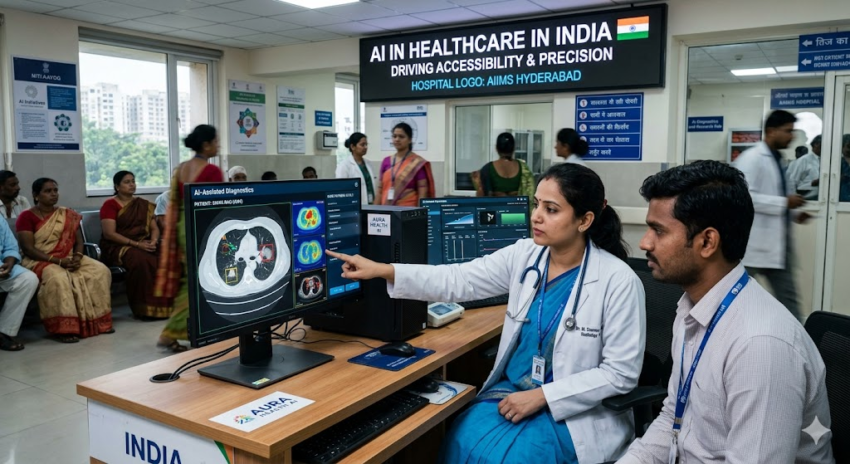
AI tools are now part of real patient care in India, not just research papers. From TB screening to diabetic eye checks, algorithms are catching diseases earlier and helping doctors handle huge patient loads. On this site, we track AI tools, AI news in India and worldwide, and tutorials so young readers can see where the real opportunities are. For AI and tech students, understanding how hospitals and startups actually deploy models is the first step to building solutions that matter.
Full Overview and Key Highlights
India’s healthcare system has always struggled with doctor shortages, long queues, and late diagnosis, especially in government hospitals and rural areas. AI is now being used as a “force multiplier” to support doctors, nurses, and ASHA workers rather than replace them. The IndiaAI Mission and the Ayushman Bharat Digital Mission (ABDM) are pushing AI-driven tools into public health programs and the wider digital health ecosystem.
Key highlights you should know today:
- The India AI in healthcare market was worth about USD 0.83 billion in 2023 and is expected to reach around USD 17.75 billion by 2032, with a massive CAGR of about 40.5%.
- Government programs are already using AI for TB chest X‑ray screening, diabetic retinopathy screening, and outbreak surveillance, reporting a 27% decline in adverse TB outcomes and over 4,500 outbreak alerts.
- ABDM is building the core plumbing: Health ID, Health Facility Registry, Healthcare Professionals Registry, and a Unified Health Interface so that AI systems can plug into real patient data flows in a secure way.
- Startups like Qure.ai and Dozee are deploying AI in radiology and remote patient monitoring, while healthtech 2.0 companies like Ultrahuman and Twin Health focus on continuous monitoring and chronic disease management.
In practice this means: a patient in a district hospital can get an AI‑read chest X‑ray within minutes, an ANM worker can use an app to flag high‑risk pregnancies, and a diabetes patient in Varanasi can be monitored from home through AI‑enabled wearables. For AI students, this is one of the few domains where your models can directly impact mortality, not just click‑through rates.
Eligibility Criteria Complete Breakdown
You’re not applying for a single “AI doctor job,” but different roles across government programs, hospitals, and startups. Still, certain patterns repeat across most opportunities for 18–25‑year‑old students in India. Think of eligibility in five layers: age, education, skills, compliance, and practical readiness.
1. Age band for most entry roles
- For internships, fellowships, and junior data roles, typical age range is 18–28 for fresh graduates, slightly flexible for PG students. This is common in startup fellowships and government innovation schemes supported by the IndiaAI Mission.
- Research assistant roles in institutes or AI centres usually accept anyone with a relevant degree irrespective of age, but most applicants are early 20s. This matters more for fellowships than for pure jobs.
2. Educational tracks that actually get hired
- Core AI engineer / data scientist: B.Tech/BE in CSE, AI/ML, ECE, or related, often with projects in deep learning, computer vision, or NLP.
- Health data analyst: B.Sc in Statistics, Mathematics, or Computer Science, or B.Tech with strong data skills, sometimes followed by a PG diploma in health informatics or public health.
- Clinical AI liaison / product specialist: MBBS, BDS, BPT, B.Sc Nursing, or B.Pharm plus interest in digital health; these professionals work between AI teams and doctors.
- For serious medical AI work, many teams prefer at least one member with a biomedical or public health background so that models respect clinical realities.
3. Skills beyond the degree
Most people quietly underestimate this layer and focus only on degrees, but the single most common rejection reason is weak hands‑on experience with real healthcare data. Recruiters look for:
- Experience with Python, PyTorch/TensorFlow, and basic MLOps.
- Familiarity with DICOM images, time‑series vitals, or EHR‑style tabular data rather than just MNIST or CIFAR‑10.
- Understanding of privacy, consent, and bias in healthcare datasets, especially under the NDHM “single source of truth” vision.
4. Nationality, domicile, and compliance
- For government‑funded projects, Indian citizenship is usually required; some central institutions may accept foreign nationals under specific rules.
- Domicile only comes into play for state health projects and some state‑level innovation challenges, where preference may be given to local candidates.
- Background verification, medical fitness, and sometimes vaccination status are expected for roles that work inside hospitals.
5. Physical and medical standards in field roles
- Field implementation jobs (for example, deploying AI tools in rural health centres) often need frequent travel, long days, and comfort in semi‑urban or rural settings.
- If you are working with infectious disease programs like TB, you may undergo additional health screening and must strictly follow infection control protocols.
When you actually try to fit into one of these roles, you quickly realise you need a blend: solid ML skills, patience for messy hospital data, and the emotional maturity to handle serious health situations.
Vacancy Distribution Full Numbers
There is no single national vacancy notification for “AI in healthcare,” but jobs spread across four main buckets: central government health programs, state digital health projects, private hospitals, and startups. The numbers below are typical patterns and growth indicators, not a formal recruitment notice.
- Central programmes (TB, diabetic retinopathy, surveillance): The government has already deployed AI tools in TB elimination and screening programmes, implying dozens of posts for data engineers, implementation officers, and monitoring specialists embedded in these missions, often via contracts and technical partners.
- ABDM and related digital health layers: With over two lakh Ayushman Arogya Mandirs now operating, the digital backbone requires tech talent in HMIS, registries, and analytics, leading to a rising stream of vendor and consulting roles rather than direct government posts.
- Private hospitals and diagnostic chains: Large chains add AI‑linked roles mainly in radiology, pathology, and hospital analytics; openings are fewer than IT services but often better paid and more specialised.
- Startups and healthtech 2.0: In the first half of 2025, healthtech startups raised about ₹68,724 crore, making healthcare the second‑most funded vertical after fintech; this capital directly fuels new roles in AI engineering, data science, product, and clinical operations.
Total “vacancies” across these buckets are fluid, but market estimates show the overall India AI healthcare segment on track to grow several‑fold by 2032, which implies thousands of direct and indirect roles over the next few years. Many postings never show up on government portals and instead appear as startup listings, innovation fellowships, or contracts under implementation partners, so the surface job count often looks smaller than the actual opportunity.
Eligibility vs Requirements Comparison Table
Below is a practical comparison of four common early‑career paths related to AI in Indian healthcare. It’s not an official recruitment table, but a decision tool for students.
| Path / Role Type | Typical Age Limit | Core Qualification | Vacancy Trend / Count (approx pattern) | Salary Band (early stage, monthly) | Selection Style | Best for / Verdict |
| AI Engineer at Healthtech Startup | 20–28 | B.Tech/BE in CSE/AI/ML/ECE | Dozens of roles across top startups in metros, growing with funding cycles | ₹6L–₹18L CTC equivalent per year | Tech interviews, coding + ML tasks | Best if you enjoy coding, fast experiments, and can handle startup uncertainty |
| Health Data Analyst in Hospital / Chain | 21–30 | B.Sc Stats/CS or B.Tech with data focus | A handful of roles per big hospital group, adding slowly with digital adoption | Often ₹4L–₹10L CTC per year | Aptitude + Excel/SQL + case studies | Good if you like dashboards, Excel/SQL, and speaking both “doctor” and “data” |
| Clinical AI Liaison / Product Specialist | 22–32 | MBBS/BDS/BPT/BSc Nursing/B.Pharm | Limited but rising, mainly in radiology AI and chronic disease platforms | Often higher for clinicians; varies widely | Interviews with clinical + product leads | Ideal if you’re a clinician who loves tech but not full‑time coding |
| Govt‑linked Digital Health / ABDM Project Fellow | 21–30 (often) | B.Tech/PG in CS, health informatics, public health | Small cohorts per scheme, project‑based positions across states | Stipends or ₹5L–₹12L CTC per year | Written test + interviews | Best if you want impact at scale, policy exposure, and structured project work |
Most students end up deciding between startup roles and hospital/ABDM‑linked work; the usual trade‑off is fast learning and equity potential at startups versus more stable structure and clearer working hours in institutional settings. When you actually talk to people in each path, a pattern emerges: startup folks rave about speed but complain about burnout, while digital‑health fellows love impact but sometimes miss the technical depth of product‑first teams.
Selection Process Every Stage Explained
There is no unified exam, but the selection journey tends to follow a similar pipeline across AI healthcare opportunities. Knowing this sequence early helps you build the right projects and signals.
- Screening of resume and portfolio
- Recruiters first check if you have real projects with healthcare data, not just generic Kaggle competitions.
- Publications, GitHub links, and internships at hospitals or healthtech startups get more weight than MOOCs alone.
- Written test / online assessment
- For technical roles, expect MCQs or coding rounds focusing on Python, probability, statistics, and ML basics.
- Some healthcare‑specific fellowships add questions on public health schemes, NDHM/ABDM basics, and data privacy norms.
- Technical interview
- Topics include model choice for imbalanced medical data, handling missing values, understanding metrics like sensitivity, specificity, and AUC in clinical settings.
- Most people find that interviewers care less about fancy architecture names and more about whether you respect patient safety and know how to validate models in real‑world conditions.
- Domain or clinical interview (for some roles)
- If the role is close to doctors, you may face a clinician who checks if you understand hospital workflows: radiology reporting, OPD crowding, or chronic disease follow‑up cycles.
- Here they test if your solution fits Indian constraints like low internet bandwidth, crowded wards, and non‑English‑speaking patients.
- HR / cultural fit
- Questions around why healthcare, how you handle ethical dilemmas, and your comfort with emotionally heavy cases such as ICU data or cancer diagnosis.
- Startups often include discussions around relocation to major cities and hybrid/onsite work; government projects may ask about travel to field sites.
- Compliance, documents, and medical checks
- Standard KYC, educational verification, and, in some hospital roles, basic health screening or vaccination proof.
- For government‑linked programmes, contracts may include clauses around data confidentiality aligned with NDHM standards.
The “merit list” in this ecosystem is informal: a mix of your portfolio, interview performance, and alignment with the specific mission TB elimination, diabetic eye care, ICU monitoring, or chronic disease management.
How to Apply Online Step by Step
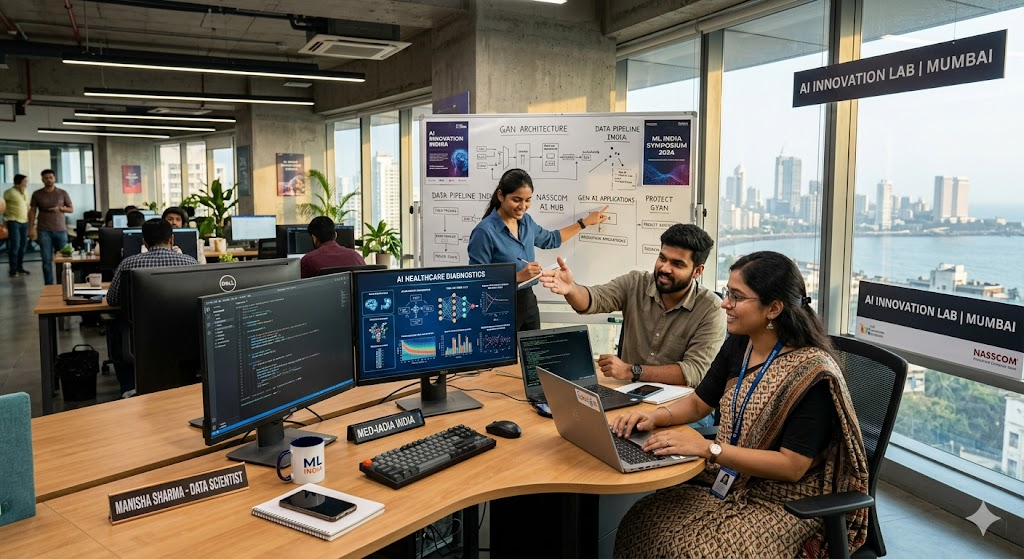
Because there is no single portal, you need a structured way to track and apply across government missions, hospitals, and startups. The basic pattern, though, feels similar once you’ve done it a few times. Below is a generic but realistic flow you can adapt.
- Step 1: Go to the relevant website
- For government‑linked roles, start with the Ministry of Health & Family Welfare, ABDM, or IndiaAI Mission portals.
- For startups, use their official sites or trusted platforms like LinkedIn and specialised job boards.
- Step 2: Find the careers or recruitment section
- On government sites, look under “Vacancies,” “Tenders & Opportunities,” or specific project pages for TB, surveillance, or digital health.
- Startups usually have a “Careers” link in the footer, listing AI/ML, data, and product roles.
- Step 3: New registration / profile creation
- Create an account with your email and mobile number. You may need to verify via OTP, similar to other Indian government platforms.
- Fill your basic details carefully; these often auto‑populate forms for future applications on the same portal.
- Step 4: Fill the application form
- Key fields include education details, project experience, internships, and a short statement of purpose for why you want to work in healthcare AI.
- When you actually try to write this section, specificity helps: mention your exact model, dataset type, and outcome, not generic “I did a health project.”
- Step 5: Upload documents
- Common documents: updated CV, mark sheets, degree certificates, government ID, and sometimes code samples or portfolios.
- Many portals prefer PDF with size limits like 1–2 MB per file; government sites often specify resolution and format clearly, similar to other recruitment portals.
- Step 6: Pay any application fee (if applicable)
- Government fellowships or exams may charge a small fee by category payable via net banking, UPI, or card; many startup applications are free.
- If payment fails, wait for bank/SMS confirmation before retrying; repeated payments are a common headache, and government sites usually provide a grievance channel or helpline.
- Step 7: Submit and save confirmation
- Download the final application PDF and email confirmation; keep a local copy plus a cloud backup.
- One common mistake is not noting the application ID, which you will need later for status checks and interview calls.
For roles on LinkedIn or startup sites, the flow is simpler—upload CV and portfolio, then wait for response—but the principle remains: clean documents, clear healthcare‑focused projects, and contact details that you actually monitor.
Important Dates Complete Schedule
Since we are not dealing with a single exam, think in terms of “seasons” and project cycles rather than one fixed schedule. Still, the ecosystem shows certain patterns.
- Startup hiring cycles (tentative): Often strongest after funding rounds and at the start of financial years, when budgets refresh; 2025 data shows major healthtech funding spikes in the first half of the year.
- Government innovation calls (tentative): IndiaAI and health ministries tend to announce schemes and innovation challenges in aligned waves, with application windows of 4–8 weeks; keep watching PIB releases and mission pages.
- ABDM and digital health projects (ongoing): As over two lakh Ayushman Arogya Mandirs and connected facilities ramp up, implementation roles open in phases, often linked to new states or districts going live.
- Academic fellowship intakes (more fixed): University‑linked AI and health informatics centres usually follow academic calendars, opening calls once or twice a year with clear application and interview dates.
You should treat “check the official website regularly” not as a cliché but as a real strategy: PIB updates, mission pages, and credible LinkedIn posts are often the only early hints you get before positions fill.
Preparation Strategy What Actually Helps
Most students either over‑focus on generic ML theory or jump straight into hospital work without enough technical depth. You need a balanced preparation plan centred on Indian healthcare realities.
- Master core ML, but with medical‑style data
- Work on projects using tabular health records, noisy time‑series vitals, and DICOM images rather than only toy datasets.
- Try to reproduce or extend a simple medical paper result on publicly available datasets; you will learn fast why label quality and class imbalance matter so much.
- Learn the Indian digital health stack basics
- Read summaries of NDHM/ABDM to understand Health IDs, registries, and the “capture once, use many times” principle.
- When you know how data flows between hospitals, labs, and apps, your project ideas become far more realistic and easier to pitch to recruiters.
- Build one portfolio project with end‑to‑end thinking
- Pick a concrete problem like TB X‑ray screening, diabetic retinopathy detection, or hypertension risk prediction and build an end‑to‑end pipeline.
- Include data cleaning, model training, validation, and a simple frontend; most people stop at notebooks, but recruiters love seeing usable demos.
- Understand ethics, bias, and safety
- Read about how AI could miss cases in under‑represented groups or be mis‑used without proper supervision.
- In interviews, candidates who can talk calmly about trade‑offs between recall and precision in life‑critical tasks stand out as “ready for healthcare.”
- Follow actual Indian healthcare AI news
- Track PIB releases on AI in TB, diabetic eye screening, and disease surveillance; this gives you real numbers and context for your answers.
- Keep an eye on funding news about Qure.ai, Dozee, Ultrahuman, Twin Health, and similar startups; they hint at where hiring will spike.
Cut‑off wise, there are no central marks, but competition is stiff: for prestigious fellowships and top startups, your “cut‑off” is often a strong project portfolio plus clear healthcare motivation, not a single exam score. One very practical tip from people already working in this space: mention your comfort working with emotionally heavy data (ICU, oncology, mortality) honestly some students realise only later that this affects them more than expected.
Previous Year Cut‑offs and Pattern
Because we are not dealing with a standardised government exam, formal cut‑off marks are rare, but you can still think in patterns. Many AI healthcare fellowships and roles use multi‑stage evaluation similar to other competitive programmes.
- Written tests (where used): These often weigh basic programming and math heavily, with a smaller portion on healthcare or policy awareness; think 60–70% technical, 30–40% domain and general aptitude.
- Shortlisting norms: For popular programmes, only a small fraction of applicants reach interviews; on the ground, mentors report that 10–20% of applicants show enough hands‑on experience to be taken seriously.
- Interview expectations: The “pattern change” in recent years is clear: earlier, many interviewers were okay with ML theory; now they push on deployment experience, MLOps basics, and handling of real clinical constraints.
For students looking for a numeric mental model, imagine an informal scoring system: strong portfolio (40%), technical test (30%), interviews (20%), and alignment with mission and ethics (10%). This is not written anywhere, but it reflects how teams actually weigh candidates. The absence of official cut‑offs is both a challenge and an opportunity you can’t rely on “just clearing an exam,” but you can jump ahead of the pack with one or two genuinely thoughtful healthcare projects.
Frequently Asked Questions
How is AI actually used in Indian hospitals right now?
AI is already supporting TB screening, diabetic retinopathy checks, and disease surveillance in national programmes, often helping non‑specialists perform high‑level screenings. In private hospitals and diagnostics, AI tools assist with radiology reporting, triage of critical cases, and early warning based on ICU vitals. Startups also offer home‑based monitoring for chronic diseases like diabetes and heart conditions using wearables and smart sensors. When you talk to clinicians using these tools, many describe AI as a “second reader” or “assistant” that catches what a tired human might miss at the end of a long shift.
Can AI solve the doctor shortage problem in India?
AI cannot replace doctors, but it can stretch their impact by handling routine tasks and flagging high‑risk patients earlier. National programmes report that AI‑enabled screening has already contributed to a 27% decline in adverse TB outcomes and thousands of outbreak alerts, which shows real impact at scale. AI‑powered chatbots, triage tools, and decision support systems can help less‑trained workers and nurses manage basic cases, freeing doctors to focus on complex ones. In practice, the shortage becomes more manageable when every clinician is backed by decision support rather than expected to carry all the cognitive load alone.
Is AI in healthcare a good career for Indian students?
Yes, it is one of the fastest‑growing AI niches in India, with the market expected to grow from about USD 0.83 billion in 2023 to roughly USD 17.75 billion by 2032. Funding for healthtech startups is also strong, with about ₹68,724 crore raised in just the first half of 2025, creating fresh demand for AI engineers and data scientists. Beyond startups, government missions and ABDM‑driven digitisation open roles in implementation, analytics, and research. If you like building things that affect real people’s lives, this domain offers both impact and long‑term stability.
Do I need a medical degree to work in AI for healthcare?
You do not need a medical degree for most AI engineer or data roles, but someone on the team must understand clinical workflows deeply. B.Tech and B.Sc graduates with strong ML skills and healthcare‑focused projects can do very well, especially when partnered with clinicians. Medical or nursing graduates fit naturally into clinical AI liaison roles, where they translate between doctors and technical teams. When you actually work on a project, you’ll notice the best results come from a tight partnership: tech people handle models, clinicians ensure relevance and safety.
How does NDHM/ABDM support AI in healthcare?
The Ayushman Bharat Digital Mission creates the digital backbone—Health IDs, facility and professional registries, and a Unified Health Interface—to link patients, hospitals, and apps. This structured, interoperable data environment is exactly what AI systems need to train safely and work at scale. By promoting principles like “capture data once and use many times” and a “single source of truth,” NDHM reduces data silos that previously blocked AI projects. For students, understanding this architecture is like learning the “OS” of Indian digital health before you start building applications on top.
What are some real Indian AI healthcare startups to watch?
Well‑known names include Qure.ai in radiology, Dozee in remote patient monitoring, Ultrahuman in metabolic health, Twin Health in diabetes management, and other healthtech 2.0 players focused on continuous monitoring. These companies deploy AI models into ICUs, radiology departments, and homes, not just lab demos. Many have raised significant funding, which usually translates into regular hiring for AI, data, and product roles. Following their blogs, engineering talks, and job postings gives you a live syllabus for what skills matter right now.
Is AI in healthcare safe and ethical?
AI can be safe when designed with proper validation, monitoring, and human oversight, but there are real risks if deployed carelessly. Concerns include biased models that underperform on certain populations, over‑reliance by busy clinicians, and privacy issues around sensitive health data. India’s digital health strategies emphasise secure architectures like zero‑trust design and strong governance to protect data and build trust. As a practitioner, you need to treat ethics as part of the job description, not a side topic you read about once.
How can a college student start today without hospital access?
You can begin with public datasets, open‑source papers, and simulated projects that mimic Indian conditions. Join online communities, hackathons, and student groups focused on healthtech and use them to build small but realistic prototypes. Reach out to local doctors or small clinics for feedback on your ideas; even one conversation can change how you design your next model. Over time, aim for at least one project that touches real users, even if it’s a small screening tool for a college health camp or NGO collaboration.
Conclusion
If you are 18–25 and serious about AI, the single most powerful move you can make now is to pick one real Indian health problem and build a small, careful AI solution around it. Use official mission sites and credible startup pages as your “job portal,” and keep checking them every few weeks as ABDM expands and healthtech 2.0 funding continues. Treat this article as a roadmap, then go deeper with actual projects, doctor conversations, and continuous learning on ethics and deployment. And remember: healthcare is a long‑term field if you stay patient and keep building, your code can literally help save lives.You can also go and check mhy article on CHATGPT Alternatives

About the Author:
Shankar Sharma is a technology blogger focused on artificial intelligence and emerging digital tools. Through AI These Days, he shares in-depth guides, tool reviews, and practical insights to help users stay updated with the fast-changing AI landscape.






1 thought on “AI in India’s Healthcare Sector: Saving Lives with Smart Technology”