What is Artificial Intelligence? Complete Beginner’s Guide (2026)

Artificial Intelligence (AI) is one of the most powerful and fast-growing technologies in the world today. From smartphones and virtual assistants to self-driving cars and smart recommendations, AI is transforming how we live, work, and interact with technology.
In this complete beginner’s guide, you will learn what AI is, how it works, its types, real-life examples, benefits, challenges, and what the future holds in 2026 and beyond.
🤖 What is Artificial Intelligence?
Artificial Intelligence refers to the ability of machines or computer systems to perform tasks that normally require human intelligence.
These tasks include:
- Learning from data
- Problem-solving
- Understanding human language
- Recognizing images and patterns
- Making decisions
In simple terms, AI enables machines to simulate human thinking and behavior.
🧠 How Does AI Work?
AI works using a combination of data, algorithms, and computing power.
Here’s how it works step-by-step:
- Data Collection – AI systems are trained using large volumes of data
- Algorithms – These are rules or instructions that help machines process data
- Machine Learning – AI systems learn patterns from data and improve over time
- Decision Making – Based on learning, AI makes predictions or decisions
The more high-quality data an AI system receives, the more accurate and efficient it becomes.
📊 Types of Artificial Intelligence
AI can be categorized into three main types:
1. Narrow AI (Weak AI)
This type of AI is designed to perform a specific task.
Examples:
- Voice assistants
- Recommendation systems
- Chatbots
This is the most commonly used AI today.
2. General AI (Strong AI)
General AI refers to machines that can perform any intellectual task like a human.
- Still under development
- Not yet achieved in real-world applications
3. Super AI
Super AI is a theoretical concept where machines surpass human intelligence.
- Exists only in theory
- Could potentially solve complex global problems
🔍 History of Artificial Intelligence
Artificial Intelligence is not new. Its journey started decades ago.
- 1950s – The idea of AI was introduced
- 1960s–70s – Early research and basic systems developed
- 1980s – Growth in machine learning
- 2000s – AI started becoming practical
- 2020s – Explosion of AI tools and applications
Today, AI is a key part of modern technology.
🤖 AI vs Machine Learning vs Deep Learning
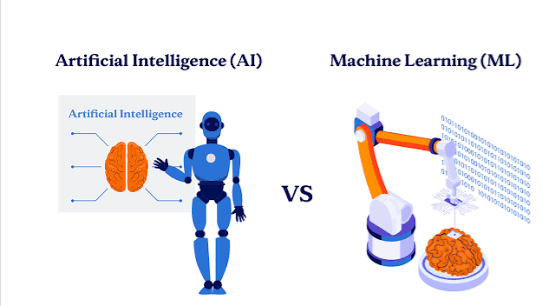
Many people confuse these terms. Here’s a simple explanation:
- Artificial Intelligence (AI) – The broader concept of machines being intelligent
- Machine Learning (ML) – A subset of AI that allows machines to learn from data
- Deep Learning (DL) – A subset of ML using neural networks to process complex data
👉 In short: AI → ML → Deep Learning
🌍 Real-Life Examples of AI
AI is already part of our everyday lives. Some common examples include:
- Voice assistants like Siri and Alexa
- Personalized recommendations on YouTube and Netflix
- Email spam filters
- Chatbots for customer support
- Self-driving car technology
- AI-powered writing and image tools
You are likely using AI daily without even realizing it.
💼 Applications of AI
AI is transforming multiple industries:
Healthcare
- Disease detection
- Medical imaging analysis
- Drug discovery
Finance
- Fraud detection
- Risk analysis
- Automated trading
Education
- Personalized learning
- AI tutors
- Smart content
Business
- Customer service automation
- Data analysis
- Marketing optimization
💰 Benefits of Artificial Intelligence
AI offers many advantages:
- Increases efficiency and productivity
- Reduces human errors
- Works 24/7 without breaks
- Automates repetitive tasks
- Improves decision-making
Businesses and individuals both benefit from AI.
⚠️ Challenges of AI
Despite its advantages, AI also has some limitations:
- Job displacement due to automation
- Data privacy concerns
- High implementation cost
- Lack of human emotions and creativity
Understanding these challenges is important for responsible AI use.
🛠️ Popular AI Tools in 2026
AI tools are growing rapidly. Some popular categories include:
- AI writing tools
- AI image generators
- AI video editors
- AI coding assistants
- AI chatbots
These tools are helping people work faster and smarter.
💼 Careers in Artificial Intelligence
AI is creating huge career opportunities.
Popular AI roles include:
- Data Scientist
- Machine Learning Engineer
- AI Developer
- AI Researcher
Even beginners can start learning AI with basic tools and courses.
🚀 Future of AI in 2026 and Beyond
The future of AI is very promising.
In the coming years, we can expect:
- Smarter AI tools
- AI integration in daily life
- Automation in most industries
- Growth in AI-related jobs
AI will continue to shape the future of technology and society.
🎯 Why You Should Learn AI
Learning AI can help you:
- Stay competitive in your career
- Increase productivity
- Explore new opportunities
- Understand modern technology
Even basic knowledge of AI can be extremely valuable today.
❓ Frequently Asked Questions (FAQs)
Is AI dangerous?
AI itself is not dangerous, but improper use can create risks. Responsible use is important.
Can AI replace jobs?
AI may replace some repetitive jobs, but it also creates new opportunities.
Do I need coding to learn AI?
Not necessarily. Many AI tools today are beginner-friendly and require no coding.
📝 Conclusion
Artificial Intelligence is no longer a future concept—it is already transforming the world around us.
From simple daily tasks to complex business operations, AI is making life easier and more efficient.
Whether you are a student, professional, or entrepreneur, understanding AI is essential in today’s digital age.
Start learning AI today and be part of the future.
🔖 Tags
Artificial Intelligence, AI Basics, What is AI, AI Guide 2026, Beginner AI Guide, Machine Learning Basics, AI Examples, Future of AI, Learn AI, AI Technology
Also you can see my blog of ai tools Top AI tools

About the Author:
Shankar Sharma is a technology blogger focused on artificial intelligence and emerging digital tools. Through AI These Days, he shares in-depth guides, tool reviews, and practical insights to help users stay updated with the fast-changing AI landscape.
Pingback: 50 Best AI Tools in 2026 (Free & Paid) – Complete Guide - AI These days