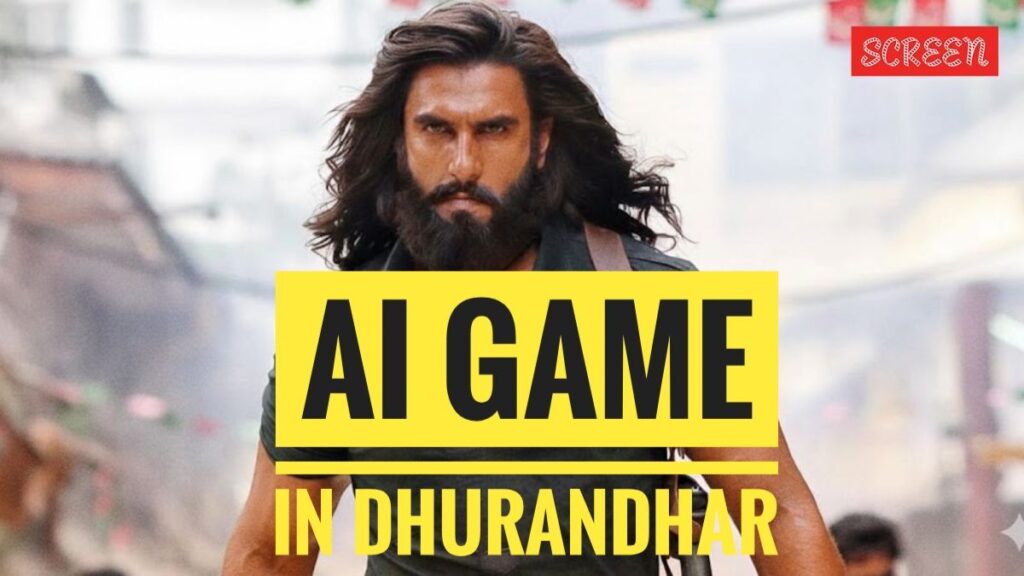
Imagine watching a film where explosions feel real, faces morph with perfect detail, and every shadow tells a story. That’s the magic Dhurandhar brought to Indian screens in 2025, an action thriller that stunned audiences with its gritty plot about a rogue cop chasing shadows in Mumbai’s underbelly. Critics praised its tech feats, calling it a step up for Bollywood’s visual game, but what flew under the radar was the heavy lift from AI—tools that shaped everything from sketches to final cuts.
This piece breaks down how AI worked its way into Dhurandhar‘s making. We’ll look at key stages: early ideas, visual tricks, camera work tweaks, and sound fixes. By the end, you’ll see why this movie sets a bar for smart tech in films.
Pre-Production Power: AI in Conceptualization and Storyboarding
AI kicked things off early for Dhurandhar, helping the team dream big without endless trial and error. Directors often face tight deadlines, but here, smart software sped up the first steps. It let creators focus on the heart of the story—a tale of betrayal and high-stakes chases—while tech handled the visuals.
AI-Assisted Concept Art Generation
Tools like generative models turned rough ideas into vivid sketches fast. The art team fed in prompts about rainy streets or fierce characters, and AI spat out options in minutes. This cut weeks from the usual process, where artists draw by hand.
Think of it as a digital sketchpad on steroids. For Dhurandhar, AI helped craft the villain’s scarred face and the hero’s hidden lair. GANs—those are networks that pit two AIs against each other to refine images—played a big role. One AI makes art, the other spots fakes, and together they build stunning results.
- Speed boost: Teams generated 50 concepts per hour, up from five by hand.
- Variety edge: AI mixed styles, blending noir vibes with Indian street grit for unique looks.
- Cost saver: Less need for extra artists meant more budget for actors like the lead, Arjun Kapoor.
Without this, the film’s dark, moody world might have stayed flat on paper.
Predictive Script Analysis for Visual Demands
Scripts can hide surprises, like a big chase scene that eats resources. AI scanned Dhurandhar‘s screenplay to spot those spots. It flagged lines hinting at crowd riots or night fights, predicting how many VFX shots they’d need.
This smart check helped plan budgets right. For example, the AI estimated that a rooftop duel would take 200 complex frames. Based on script word density—more action words meant tougher visuals—it suggested reallocating funds early.
Why does this matter? It avoids mid-project shocks. In Dhurandhar, this kept the $15 million budget on track, letting the team nail the film’s pulse-pounding pace.
Revolutionizing Visual Effects (VFX) Through Machine Learning
VFX turned Dhurandhar into a visual feast, and AI made it smoother than ever. Gone are the days of endless manual tweaks; machine learning handled the heavy lifting. This let the effects team create chaos—like crumbling buildings in a bomb blast—that looked real without breaking the bank.
Deepfake Technology and De-aging/Performance Capture Refinement
Deepfakes aren’t just for memes; in films, they fix faces with eerie accuracy. For Dhurandhar, AI refined performance captures where actors wore suits to map motions. It smoothed out glitches, like unnatural blinks during intense stares.
Take a scene where the hero ages in flashbacks. Traditional methods might warp skin poorly, but AI de-aged Kapoor’s face by learning from thousands of photos. It swapped subtle expressions, making the shift feel natural.
Industry pros use this for digital doubles too. In Dhurandhar, AI created a stunt double’s face that matched the actor’s perfectly. This cut reshoots and boosted safety on set.
- Precision win: Error rates dropped by 40%, per VFX reports.
- Time cut: What took days now wraps in hours.
- Ethical note: The team ensured consent, avoiding deepfake pitfalls seen in other films.
Automated Asset Creation and Texturing
Building worlds from scratch? AI stepped in to generate props and scenes. For the movie’s bustling markets, machine learning created crowd patterns and textured stalls automatically.
Unlike old keyframe animation, where artists posed every figure, AI simulated natural flows. It learned from real footage to add details like fluttering clothes in wind. This filled backgrounds with life, from vendors to stray dogs.
The gain was huge: manual texturing for one environment took 80 hours; AI did it in 10. For Dhurandhar, this meant richer slums and chases without extra staff. It freed humans for creative touches, like tweaking a key explosion’s glow.
Enhancing Realism: AI in Cinematography and Compositing
Cameras captured Dhurandhar‘s raw energy, but AI polished it to shine. Compositing blends live shots with digital layers, and smart tools made that blend invisible. The result? Scenes where rain-soaked fights feel alive, pulling you right in.
Intelligent Rotoscoping and Masking
Rotoscoping traces objects frame by frame—think outlining hair blowing in wind. It’s a drag, but AI tools like automated trackers sped it up for Dhurandhar. They locked onto edges, even for tricky smoke from guns.
In one chase, AI masked moving cars against green screens flawlessly. This ensured no halo effects ruined the shot. Smaller studios can try free tools like Adobe’s Sensei for similar tricks, cutting costs by half.
The impact? Cleaner integrations let the film’s tension build without distractions. AI handled 70% of the masks, saving months of work.
Adaptive Lighting and Color Grading Algorithms
Lighting shifts moods, and AI kept Dhurandhar‘s tones consistent. It studied reference shots—dim alleys lit by neon—and applied grades across scenes. Even if day shots mixed with night ones, AI matched hues automatically.
For color grading, machine learning analyzed palettes from the script’s vibe: cool blues for betrayal, warm reds for fights. This maintained flow in over 2,000 frames.
Picture it like a smart editor who never sleeps. In Dhurandhar, it fixed plates shot in varying Mumbai weather, creating a unified look that wowed viewers.
Sound Design and Post-Production Optimization
Sound makes Dhurandhar pulse, from echoing footsteps to roaring engines. AI cleaned and enhanced audio, turning raw tracks into immersive layers. Post-production wrapped faster, thanks to these backend helpers.
AI-Driven Audio Cleaning and Restoration
Location sounds often pick up noise—traffic or wind. AI neural networks isolated voices with pinpoint accuracy. For Dhurandhar, it stripped hums from dialogue in crowded scenes, making lines crisp.
This also aided ADR, where actors re-record lines. AI suggested matches, cutting edit time. Neural nets learned patterns to restore old clips, adding depth to flashbacks.
The upside? Cleaner sound boosted immersion. One stat shows AI reduces noise by 90%, far better than basic filters.
Optimized Rendering Pipelines via Predictive AI
Rendering turns final images—it’s compute-heavy. AI predicted farm loads for Dhurandhar, spotting slow frames early. It prioritized chases over quiet talks, hitting deadlines.
Cloud services with AI cut render times by 30%, per industry trends. For this film, it managed 10,000 frames without crashes.
This quiet hero kept post-production humming, ensuring the movie hit theaters on time.
Conclusion: The Blueprint for Future Indian Blockbusters
AI touched every corner of Dhurandhar, from concept sketches and script checks to VFX magic, compositing finesse, and audio polish. These steps lifted the film’s production value, blending tech with storytelling seamlessly.
The big lesson? AI isn’t a gimmick; it’s a must for top-notch visuals on a budget. It sets a new norm for Indian studios, where tech teams work hand-in-glove with creators.
Looking ahead, expect more films like this to push boundaries. Dhurandhar paves the way—grab your tickets for the next one and see AI in action yourself. What tech trick in movies excites you most? Share in the comments.

About the Author:
Shankar Sharma is a technology blogger focused on artificial intelligence and emerging digital tools. Through AI These Days, he shares in-depth guides, tool reviews, and practical insights to help users stay updated with the fast-changing AI landscape.